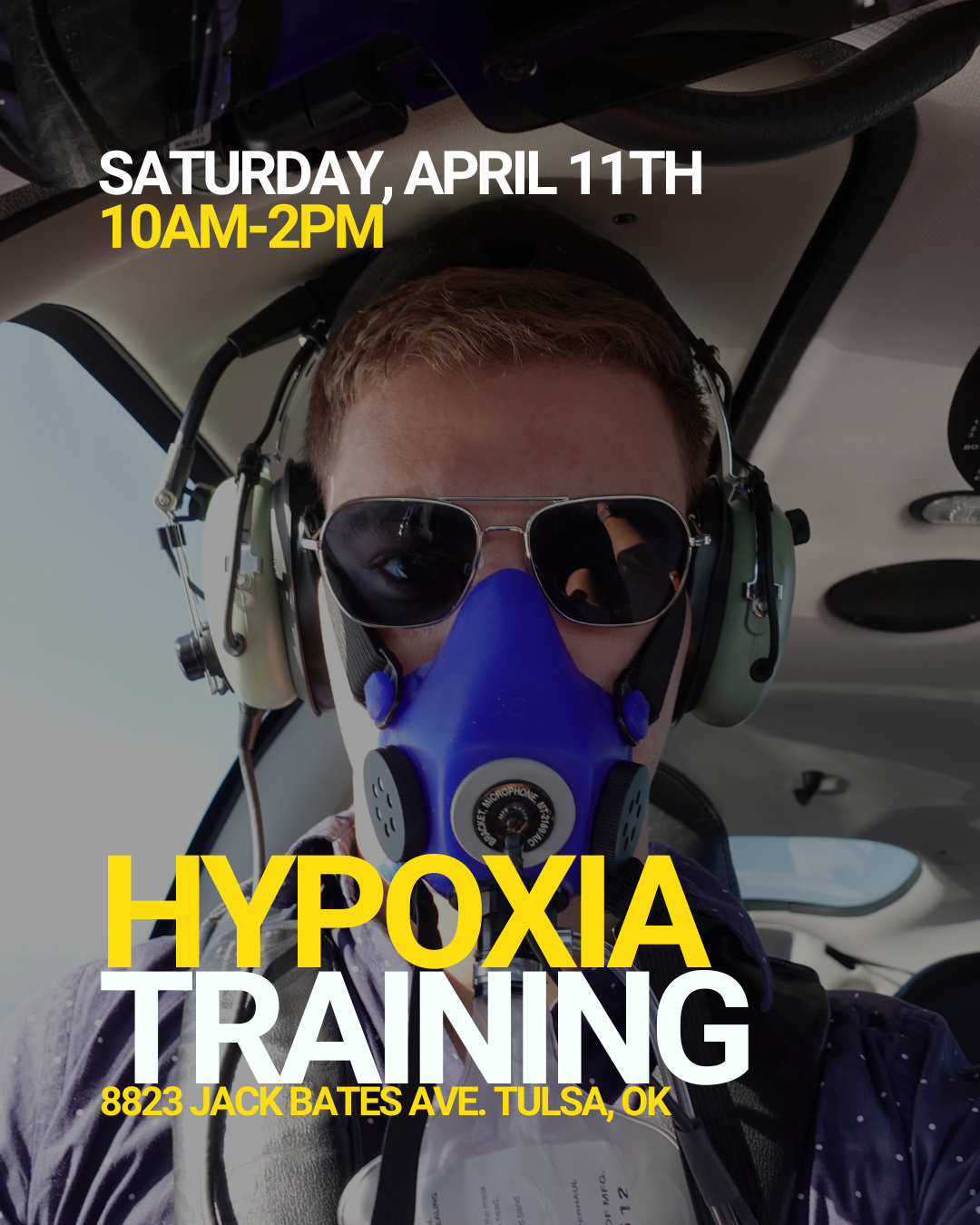
Hypoxia Training is one of the most important safety steps a pilot can take. As you climb, oxygen levels drop—and the effects can start before you notice. Your thinking slows. Your reactions get worse. And the most dangerous part is that it often feels normal.
This training lets you experience those symptoms in a safe, controlled setting. You’ll learn how your body reacts so you can spot the signs early in real flight. At Destinations Aviation, Hypoxia Training is built to give you clear awareness, better decision-making, and more confidence every time you fly.
Our Hypoxia Training at KRVS is built around real experience—not just classroom learning. Using a Reduced Oxygen Breathing Device (ROBD), we safely lower oxygen levels to match what happens at higher altitudes. This gives you a true sense of how hypoxia feels without any real risk.
The key is simple: every pilot reacts differently. Some lose focus. Some struggle with simple tasks. Others feel calm or even confident while their performance drops. That’s what makes hypoxia so dangerous—and why this training matters.
During your session, you’ll complete basic tasks while your oxygen levels change. This helps you clearly see when your performance starts to decline. More importantly, you’ll learn your personal warning signs. That awareness stays with you long after the training is over.
This type of Hypoxia Training is especially important if you fly above 8,000 to 10,000 feet. It also matters during long flights, instrument conditions, or anytime fatigue is a factor. Even experienced pilots can miss the signs if they haven’t felt them before.
At Destinations Aviation, safety is the priority. You’ll be guided step-by-step by trained professionals in a controlled environment. You are monitored the entire time, and the session is designed to educate—not push limits.
If you want to become a more aware and confident pilot, Hypoxia Training is a smart next step. It gives you real insight into how your body responds at altitude and helps you act faster when it matters most.